01Start with the pressure boundary and equipment documents
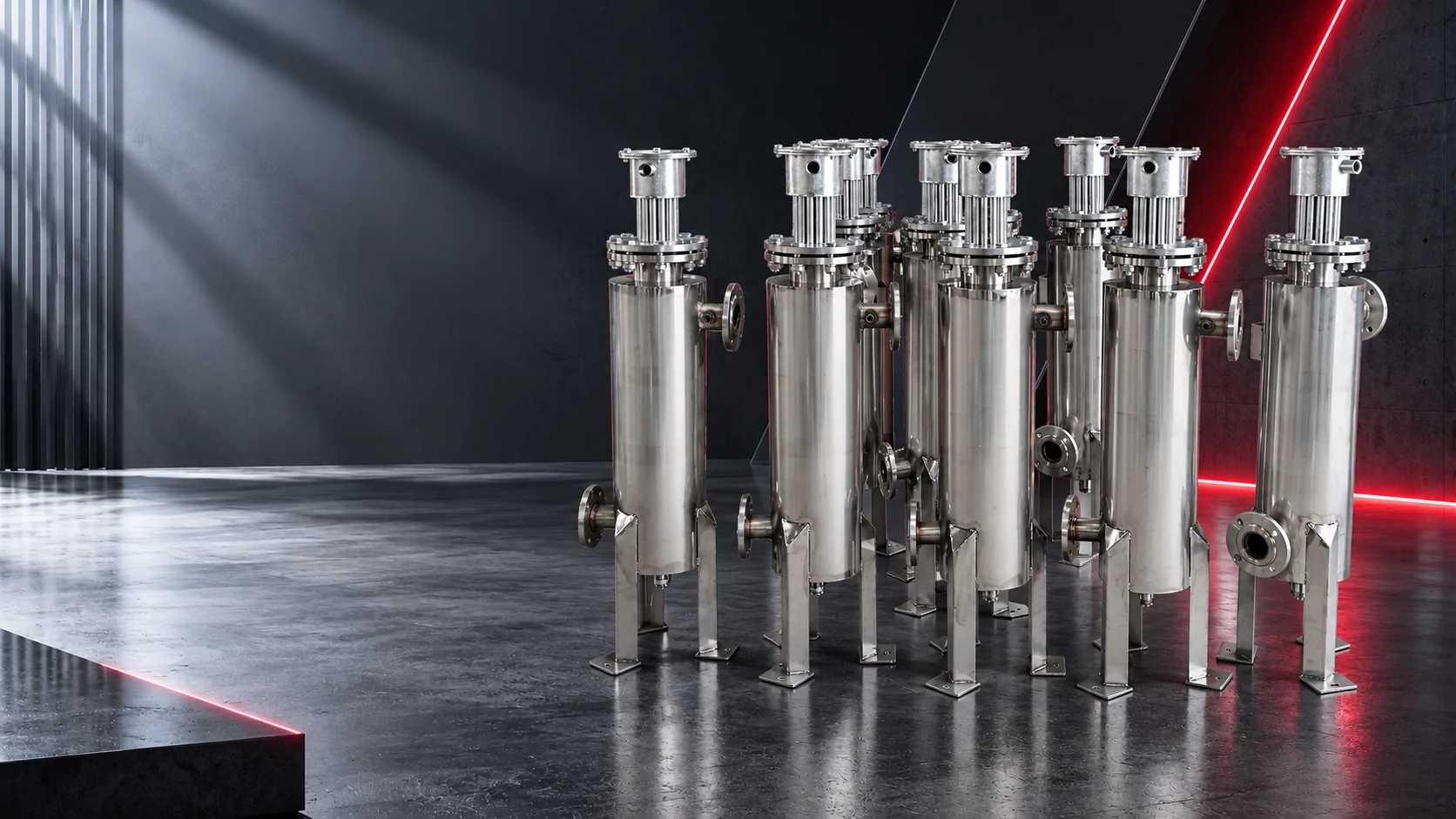
Element layout, nozzle locations, internal baffles and supports differ by heater. The manufacturer may specify permitted orientation, support points and thermal-expansion provisions. Check the general arrangement, connections, nameplate and instructions before installation.
If the drawings do not state an orientation, confirm it with the designer or manufacturer and record the decision in the installation documents. Do not infer that any angle is acceptable from nozzle locations or available space.
02Consider flow, venting and drainage together
The layout should route the medium through the intended flow path, with suitable venting at high points and draining or flushing at low points where specified. Some duties need provisions to avoid gas pockets, sediment accumulation or trapped liquid after shutdown. Confirm connection functions from the equipment drawing.
For liquid service, filling and venting should follow the instructions. For gas service, check flow direction, distribution and allowable pressure drop.
03Support, thermal expansion and pipe loads
Support the heater and adjacent piping to prevent pipe weight, thermal expansion or fit-up error from loading the flanges and nozzles. A horizontal arrangement may need additional supports; a vertical arrangement needs checks on bottom loads and center of gravity.
Do not force pipework into alignment at the connection. Check centerlines, flange parallelism and bolting before assembly; use sliding supports or expansion provisions where the design requires them.
04Allow maintenance and electrical access
Confirm that elements, terminal boxes, sensors and valves can be inspected or removed as required. Pull-out elements need axial clearance; terminal boxes need cable bend space, grounding access and suitable ambient conditions.
Before startup, verify flow direction, supports, grounding, insulation, protective interlocks and leak tightness. Engineering review is needed if the installed orientation or piping differs from the approved design.