
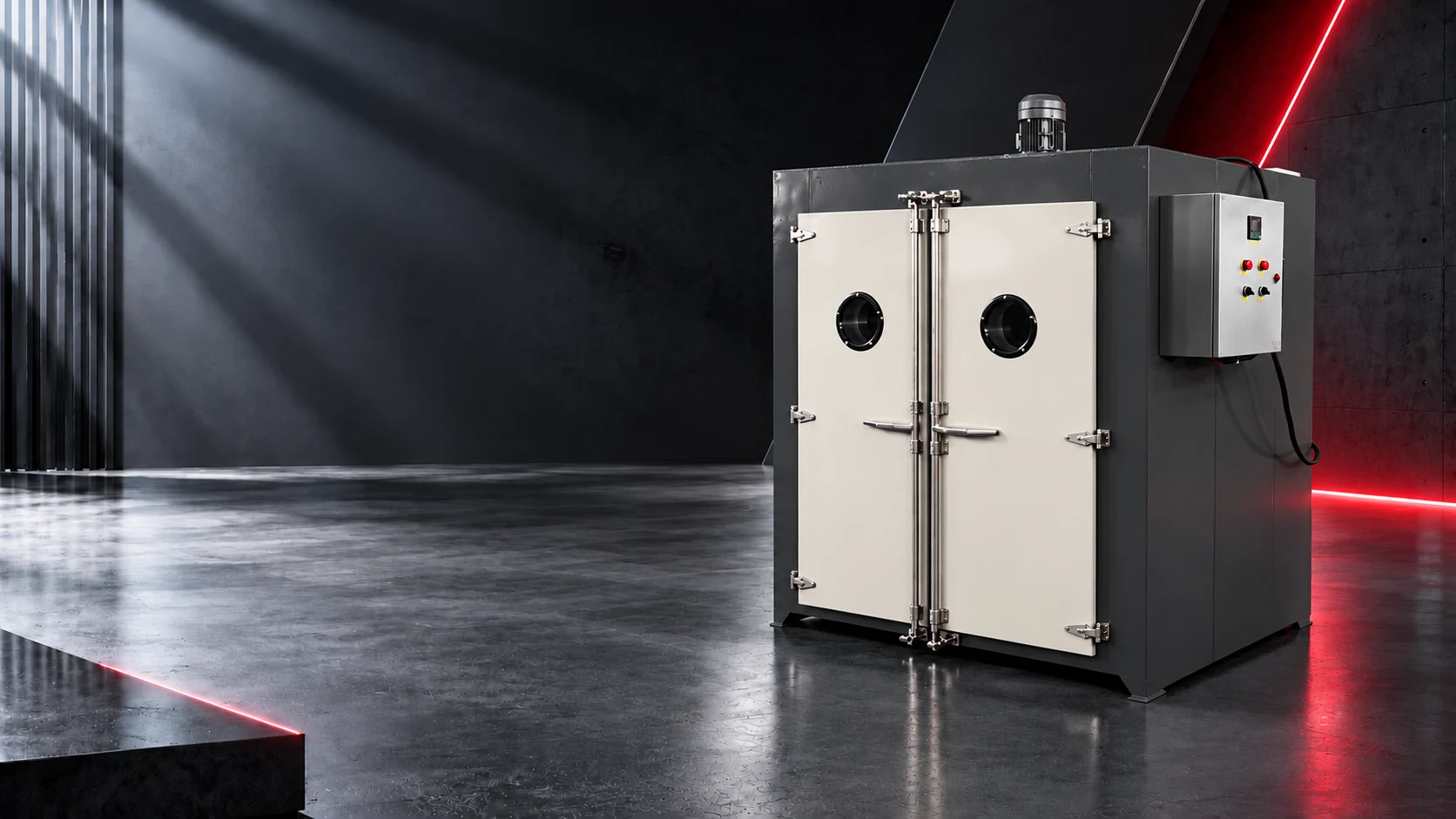
01Define the batch before calculating kW
Record material, net product mass, starting temperature, target product temperature and allowed heat-up time. Include trays and fixtures that heat with each batch. Equipment that stays hot inside the oven belongs in a separate startup or operating heat balance; avoid counting it as a cold load every cycle.
State whether the temperature requirement applies to the surface or a core location. Keep chamber setpoint, measured air temperature and product temperature in separate columns.
02A worked sensible-heat calculation
Assume 100kg of product and 20kg of fixtures. For this example only, use an average specific heat of 0.50kJ/(kg·K) for both, heating from 20°C to 120°C in 60 minutes. Confirm actual properties for the material and temperature interval.
Q = (100 × 0.50 + 20 × 0.50) × 100 = 6000kJ. The average sensible-heat load is 6000 / 3600 = 1.67kW. Requiring the same rise in 30 minutes doubles this calculated load to about 3.33kW.
These are product-and-fixture loads, not oven nameplate ratings. The arithmetic does not establish whether heat can reach the core of a thick part within the stated time.
03Add the missing heat-balance items
| Item | Information needed | Check for |
|---|---|---|
| Oven startup | Heated structure and startup frequency | Cold first batch versus hot later batches |
| Exhaust and makeup air | Required exhaust, air conditions and run time | Recirculation flow confused with exhaust |
| Evaporation | Water or solvent removed per batch and properties | Dry mass entered with no evaporation duty |
| Wall and door losses | Construction, area, ambient conditions and door cycles | An unexplained fixed allowance |
04Ask for the assumptions behind the rating
A generic multiplier does not explain which losses it covers. Ask for the main load items, assumed operating cycle and electrical supply. Keep heat-up and holding calculations separate.
Use the product and fixture calculator to check the sensible-heat component, then add the process information needed for an equipment review. A temperature trial is still needed when the product response has not been established.
↗Sources and scope
References support the design principles discussed here. Product-specific limits must come from the equipment instructions and process specification. Illustrative values are not purchase specifications.
→Continue reading
↗Related process question
Batch Oven Capacity: Include Heat-Up, Handling and Shift Time